

Prepared by: Gale Wealth Advisors
June 02, 2026
Commentary


Playing the Long Game
One of the best investing stories out there follows "Mark," the world's worst market timer. The premise is almost too simple... But the conclusion is the kind of thing that shifts how you think about investing.
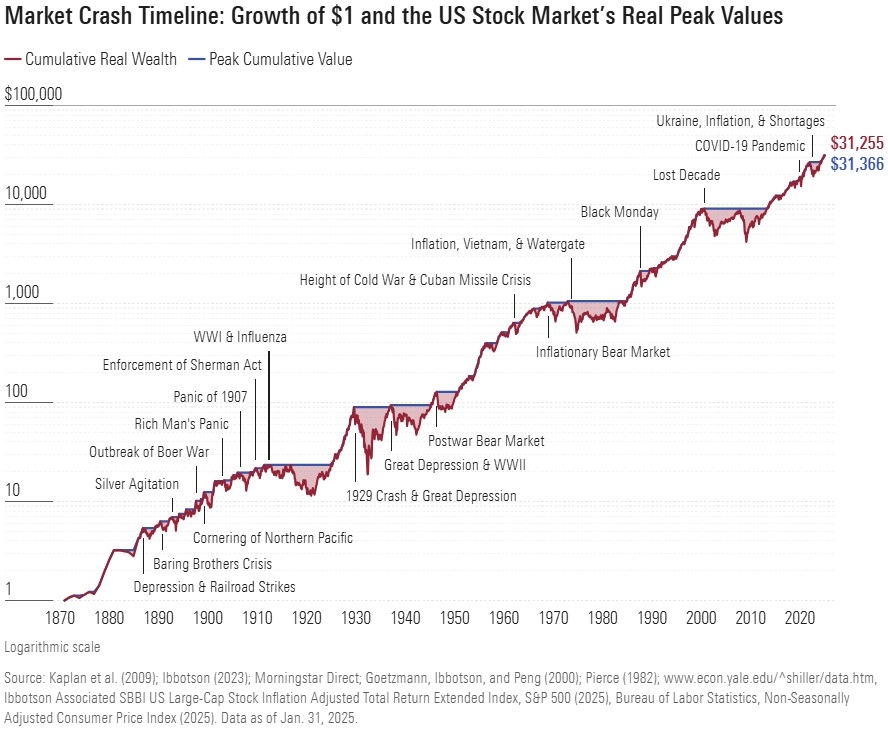
Source: https://www.morningstar.com
Mark started saving in 1970 at age 22. The problem was he could never bring himself to invest until markets had already run up significantly. He'd wait, second-guess himself, and finally pull the trigger at the worst possible moment. Let's go over all the times he pulled the metaphorical trigger:
- End of 1972, right before a nearly 50% crash.
- August 1987, right before Black Monday.
- December 1999, peak of the dot-com bubble.
- October 2007, right before the financial crisis.
- February 2020, right before the pandemic.
Five investments, five market peaks, and five crashes that followed immediately after.
Over his lifetime, Mark put in roughly $184,000 of his own savings.
And by retirement, his portfolio had grown to more than $1 million.
You may be asking yourself, "huh?" Because Mark didn't do anything right, except one thing: he never sold. Not after 1973, not after Black Monday, not after the dot-com collapse, not after the financial crisis, and not after the pandemic crash. He held through every single drawdown and collected every recovery that followed.
There're a few things worth taking away from Mark's story. Time in the market matters more than timing the market, and the math becomes increasingly forgiving the longer the runway you give it. Truthfully, the only market variable you can control is your behaviour. The next correction cannot be predicted, but whether to panic-sell when things get uncomfortable is a decision you have full control over.
Perfection is not required; patience is. And as Mark Twain once said: "history doesn't repeat itself, but it often rhymes”.
Related posts
Prepared by: Gale Wealth Advisors
May 21, 2026
Japan's Bond Market Is Breaking
Japan's bond market is experiencing its worst crisis in decades, as thirty years of artificially suppressed interest rates unwind all at once.
Read morePrepared by: Gale Wealth Advisors
August 28, 2026
Tariffs or Credibility?
The new Canada tariffs matter, but the bigger story is that growing doubts about US credibility as a negotiating partner could have much wider economic consequences.
Read more