







Investing Cash When Uncertain (A Sensible Plan of Action)
Over the past 100 years the markets have handed us four unmistakable lessons:
- Every investment carries risk and rewards
- Long‑run investment and economic trends are unmistakably positive
- Protecting your future purchasing power means beating inflation
- The world is always and forever going to be uncertain
RISK, as explained by three different investments:
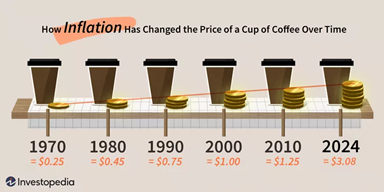 A GIC is ideal for stable, short-term savings (bucket one), but if you own a GIC for your long-term money, inflation will eat at your capital
- Shares in high quality businesses will experience significant short-term price swings. However, over the long-term, these companies have historically delivered growth that far exceeds the rate of inflation, perfect for long-term investments (bucket three)
- Real estate is generally illiquid in the near-term, and while property in desirable locations has historically outpaced inflation, preserving purchasing power, it remains subject to market risks and is not a riskless investment
So, if we all know the risk and the benefits of investing, why is it so hard for investors to put cash to work for their long-term goals? In a word: uncertainty.
Yet uncertainty is not a flaw in investing; it is the very foundation—the operating system—of markets. The astute investor recognizes this reality, relies on the proven long-term drivers of growth, and constructs a portfolio and a method to get money to work and outpace inflation. However, our greatest obstacle is fear—an emotion that sits deep within us and can keep us awake at night—making it difficult to act on what we intellectually know to be true. Accordingly, the main power tactic of successful investors is to acknowledge their emotions, particularly fear, and still act. When fear arises, it is not a signal to freeze, but rather a prompt to act in alignment with sound principles and, most importantly, consistent with our personal life needs. These needs can be distilled into two categories: the short-term need for cash and spending, and the long-term need for growth to fund the financial realities of your future life while outpacing inflation.
In practical terms, this means:
- Keep enough cash set aside for two to three years of living expenses and unexpected life events (because, as we all know, life is full of surprises)
- Invest the remainder for your future self—with a focus on conservative, long-term growth
If you find yourself sitting on cash you really do not need for 10 years or longer, how do you make these powerful long-term forces work for you?
Look at your cash holdings, decide on the amount of money you don’t need for 10 years, divide it by 12, and invest that portion every month for 12 months. Make it routine, put a plan in place and automatically invest the money. Double it up automatically if markets sell off by high single digit percentages. Triple it if markets sell off by double digit percentages or more. Why? Because we want to buy more, at cheaper prices—at least that is what the math confirms, and it is what we all say we want to do, isn’t it? So put a plan in place that makes it happen automatically. It’s simple, effective, and it removes the drivers of fear and uncertainty from the process, which is the key to long-term investing success.
As we move to the end of the year, however you celebrate the season, we wish you a wonderful Christmas and a Happy Holiday with your families, and a happy, prosperous, and healthy new year!
Randy, Ian, and Harrison
Related posts
R&R Investment Partners
January 02, 2026
Ten Principles to Live by in 2026
Welcome to 2026. As investors reflect and seek guidance, we’re here to share timeless principles and context to help you find your way, come what may.
Read moreR&R Investment Partners
November 03, 2025
Who is Alfred Neweczerzal, and How Has He Made Your Life Better?
This month, we explore the humble vegetable peeler and what it reveals about investing—especially when it comes to innovation.
Read more