




David Ricciardelli
November 16, 2026
Money Economy Commentary


Earnings continue to surge, a blue wave, and tech headlines
Earnings growth
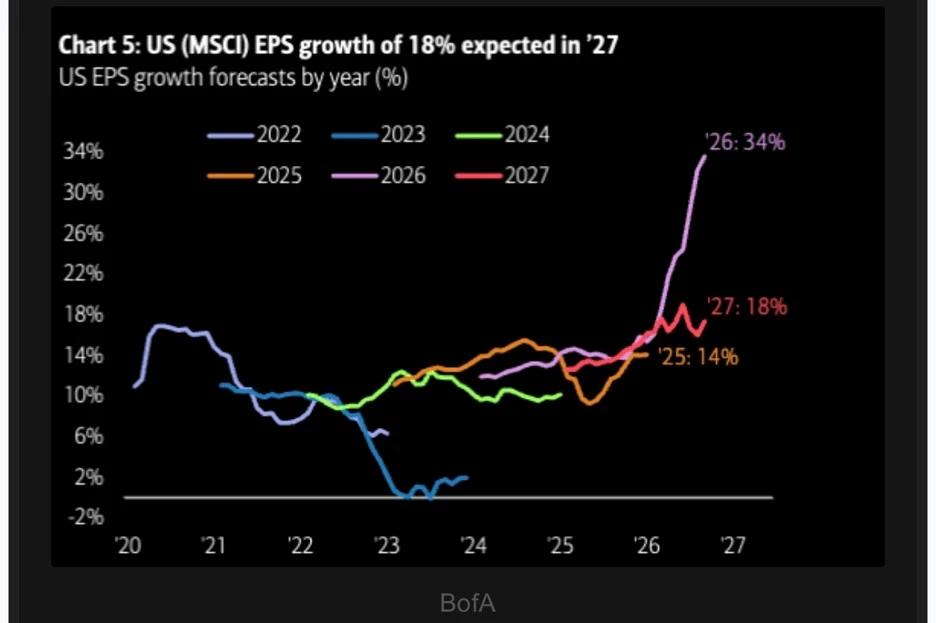
While headlines about IPOs and the behaviour of technology executives have been dominating the press over the last few weeks, the theme for 2026 remains earnings growth. With 90% of S&P 500 companies having reported third quarter earnings, earnings growth for the index is up more than 33% year-to-date. For context, S&P 500 earnings growth was a robust 13% in 2025.
Earnings have been so strong that sell-side analysts estimates have been revised higher throughout the year. This is an unusual pattern, sell-side estimates are rarely revised up late in the year.
Earnings growth has been so robust in 2026, that the valuation of the S&P 500 has compressed (meaning the S&P 500 has become less expensive) throughout the year to 17.8x, which is now below the average forward price to earnings multiple for the 2020s (19.2x) and well below the 22x forward price to earnings multiple observed at the start of 2025 and 2026.
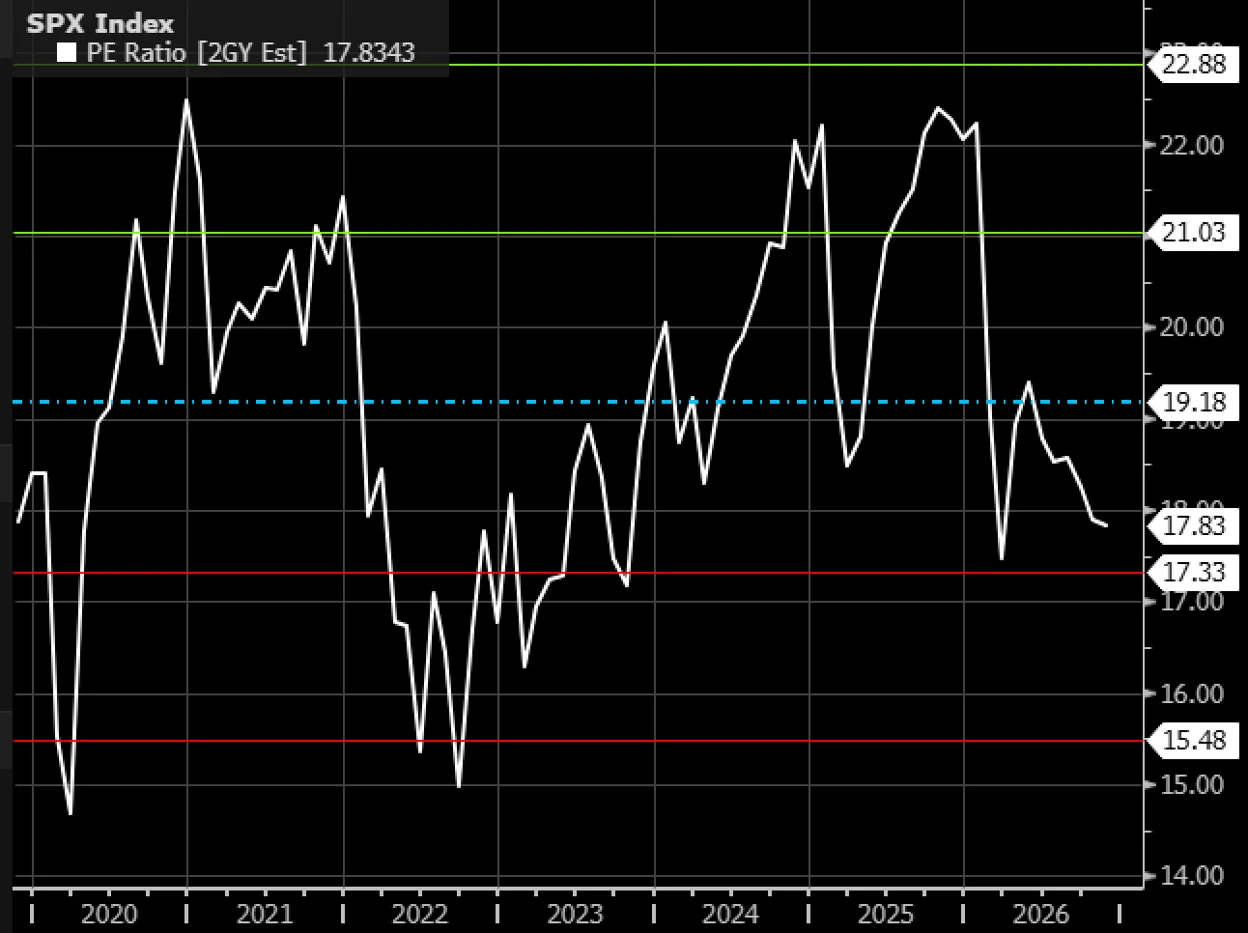
Source: Bloomberg
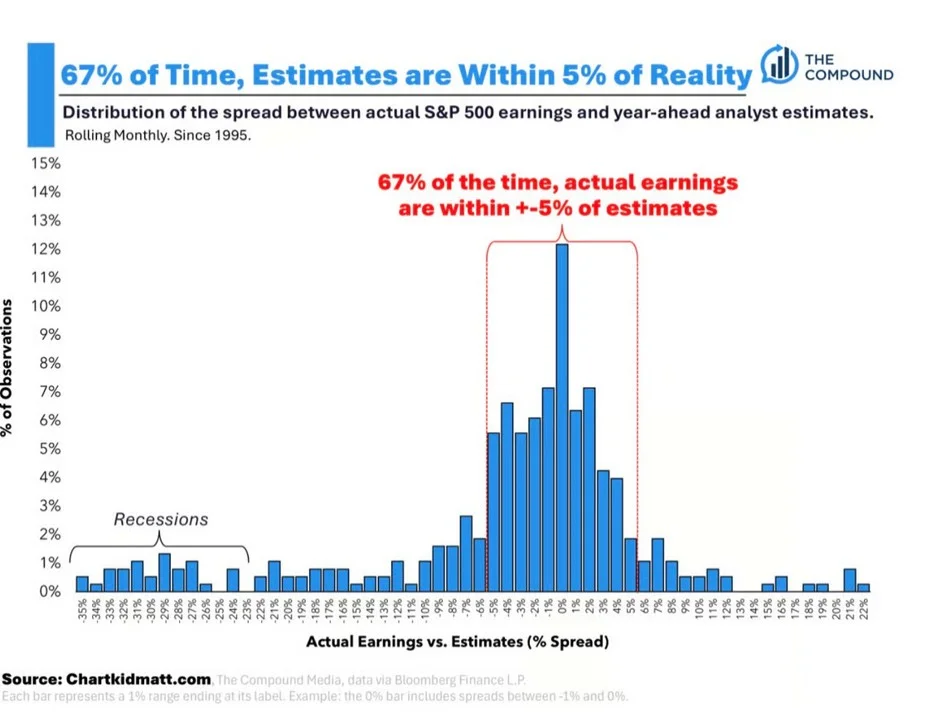
S&P 500 earnings growth is now forecast to be 18% in 2027, and sell-side analysts are effective at forecasting earnings (outside of recessions).
A blue wave
While it will take some time to determine if Congress is going to view the blue wave that swept the US in the midterm elections earlier this month as a referendum on the current administration, or as a mandate. What we have observed is that historically, equity markets tend to perform well after the US midterm elections.
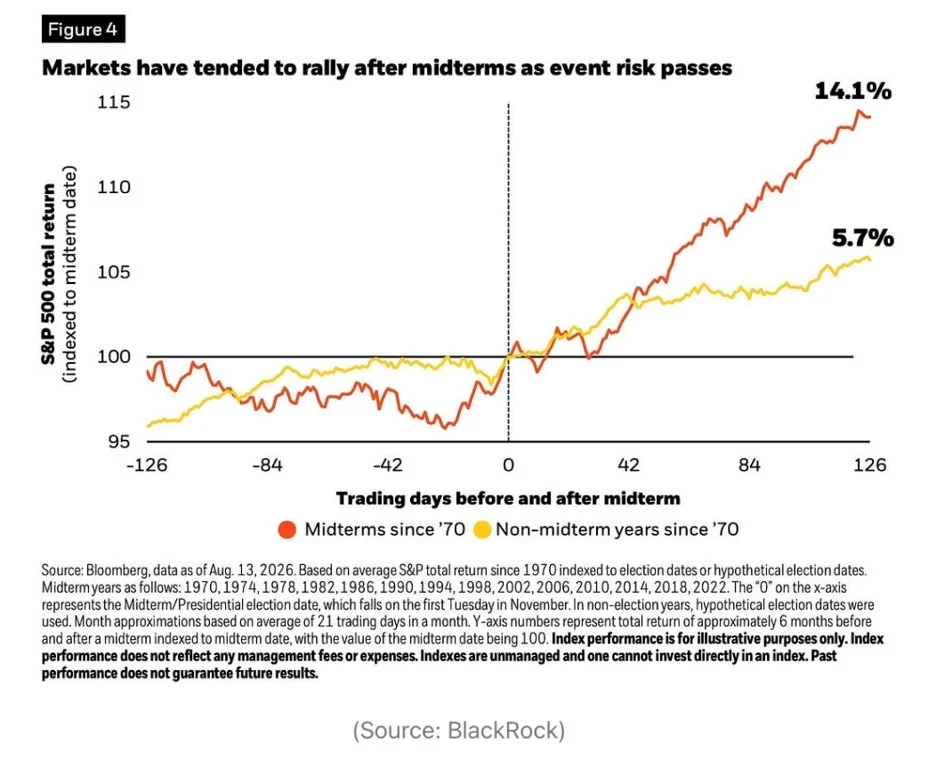
Notably, since 1946, stocks have been higher one year after the midterm election, including in all four instances where the House and the Senate flipped to the party opposing the US President. Since 1946, there has never been the onset of a recession in the third year of the US presidential cycle.
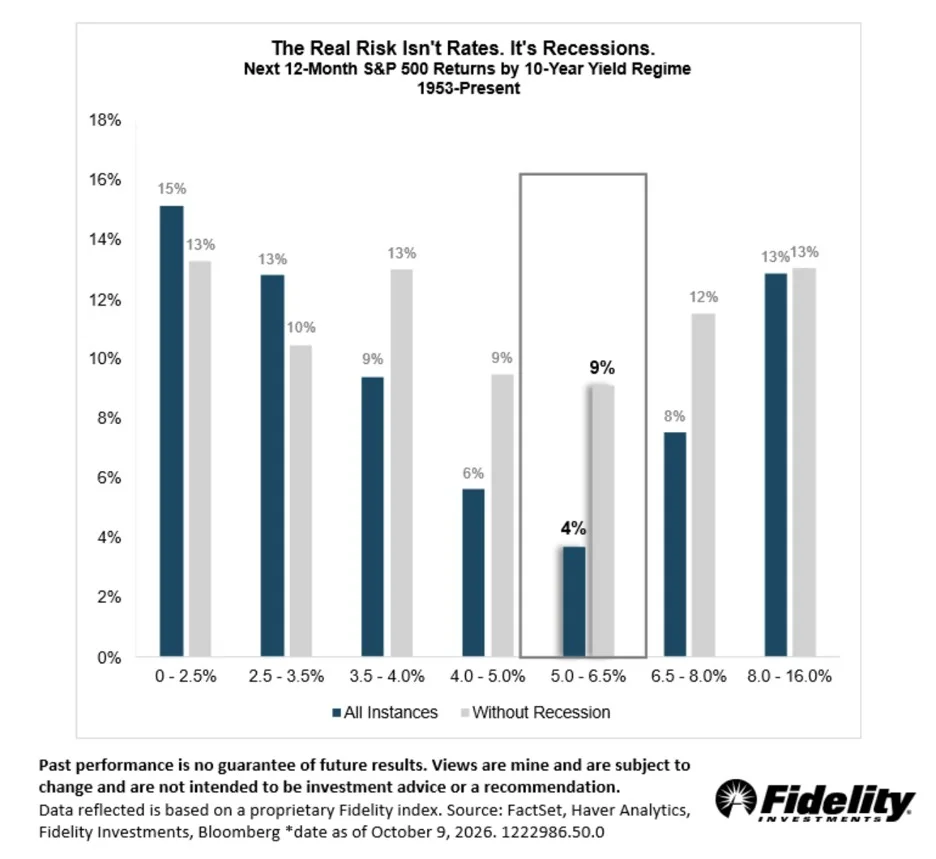
The chart below from Fidelity highlights that the real risk for S&P 500 returns isn’t rates but recessions. If we avoid a recession, equity markets have performed well in similar rate environments.
NVIDIA
For the benefit of CIBC’s Marketing and Compliance folks, I wanted to be very clear that we are not making a recommendation to purchase or sell NVIDIA stock or any other security in this post. Please contact us directly if you’d like to discuss investments. The comments below are intended to put some of the recent events in context and help respond to the onslaught of clients asking about the situation.
If you haven’t been following the events that have led up to the resignation of NVIDIA founder and CEO, Jensen Huang, I’ll wait here while you use the Google machine to get up to speed. If you’d like a recommendation, Ben Thompson from Stratechery has an excellent recap, Obituaries (Note: Jansen is alive).
While marital infidelity is never a good look, we have many examples including Amazon, Microsoft, SK Hynix, and Alphabet/Google, where the companies eventually returning to growth after the revelation of an affair by the founder and/or CEO. One of the challenges for NVIDIA, is the case is more complicated than the other examples since it involves an alleged affair with a client, a potential Chinese spy, an organization that may have been bypassing US export controls, and staff members. At minimum, the complications mean that every aspect of the company’s operation will be scrutinized more closely in the days and months ahead. Further, there will be congressional testimony that will delve deeper into the accusations.
Another item to consider is the lack of succession planning at NVIDIA. This summer we read The NVIDIA Way, by Tae Kim (book review here) and one of the main takeaways is how embedded the company’s founder was in all the company’s operations. In the book, NVIDIA is portrayed as an extension of its former CEO, who is instrumental in championing long-term investments, like CUDA, that took years to be commercially viable.
What's an investor to do?
The key for investors is often to stay invested and diversified. There are always reasons to sell, but you will not find many investors happy about selling in 2018, 2020, 2022, or in early 2025, when the market was down 19%. In 2025, and early 2026, the key (again) was to stay invested.
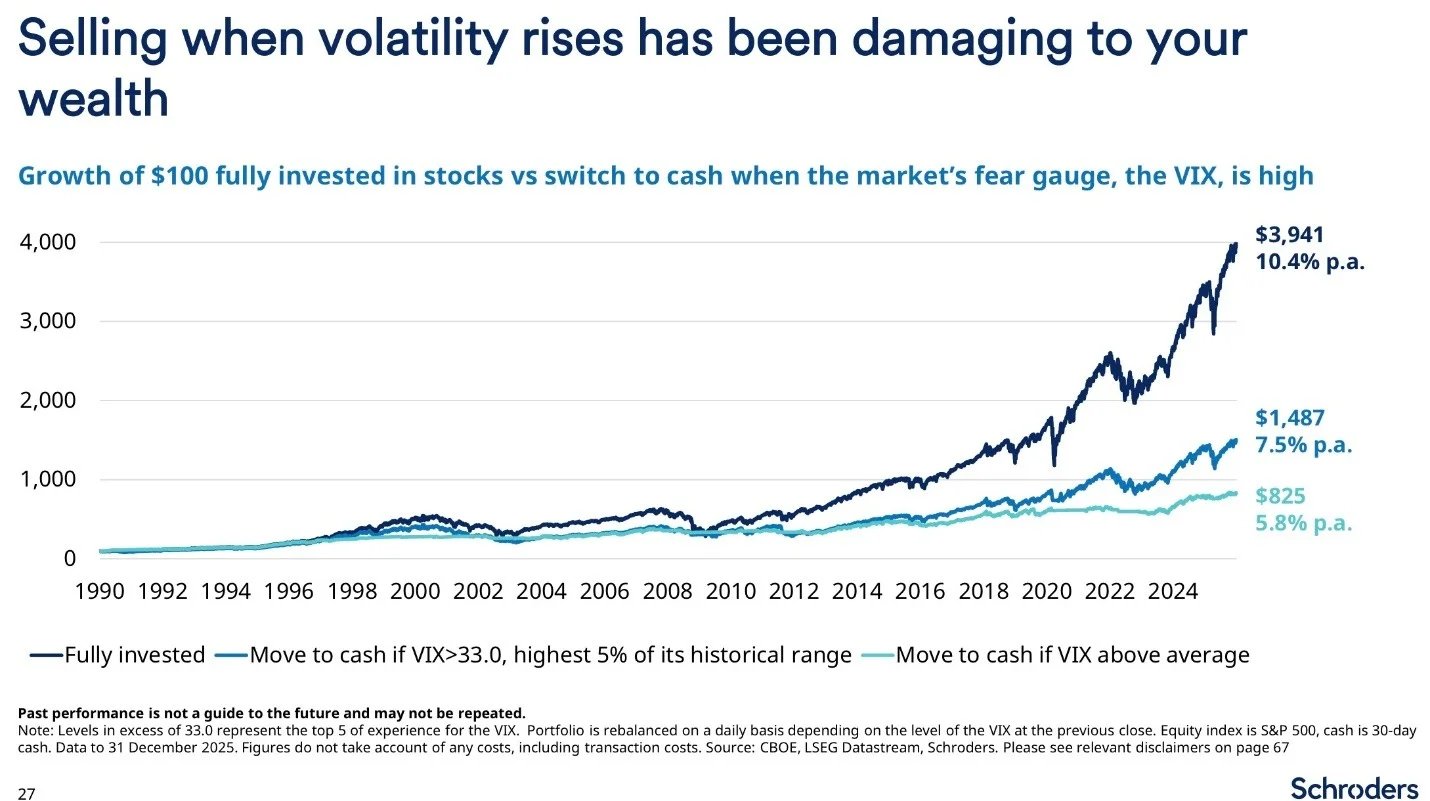
As investors, the ‘price’ we pay for returns is gut churning volatility. The table below shows the impact on returns of selling whenever volatility is above average or in the 95th percentile. Bottom line, it’s in an investor’s best interest to stay invested.
While action helps alleviate anxiety, timing markets is extremely difficult. Investors will benefit from saving and investing consistently across market cycles. This process allows investors to buy more securities when the market is inexpensive and fewer securities when the market is expensive. Consistently investing across market cycles also provides investors with fresh capital to exploit emerging structural changes.
Some investors may find value in a barbell strategy, where high-quality companies exposed to secular themes provide equity market exposure. The other side of the barbell is cash, actively managed fixed income and alternative investments that may reduce volatility and provide ballast for portfolios. For investors in the distribution phase of their lives, the focus expands to optimize the tax efficiency of distributions.
Don't hesitate to get in touch with me for a more detailed discussion.
Delli (delli@cibc.com)
Disclaimers:
This information, including any opinion, is based on various sources believed to be reliable, but its accuracy cannot be guaranteed and is subject to change. CIBC and CIBC World Markets Inc., their affiliates, directors, officers, and employees may buy, sell, or hold a position in securities of a company mentioned herein, its affiliates or subsidiaries, and may also perform financial advisory services, investment banking or other services for, or have lending or other credit relationships with the same. CIBC World Markets Inc. and its representatives will receive sales commissions and a spread between the bid and ask prices if you purchase, sell, or hold the securities referred to above. © CIBC World Markets Inc. 2026.
Commissions, trailing commissions, management fees, and expenses may all be associated with hedge fund investments. Hedge funds may be sold by Prospectus to the general public, but more often are sold by Offering Memorandum to those investors who meet certain eligibility or minimum purchase requirements. An Offering Memorandum is not required in some jurisdictions. The Prospectus or Offering Memorandum contains important information about hedge funds - you should obtain a copy and read it before making an investment decision. Hedge funds are not guaranteed. Their value changes frequently, and past performance may not be repeated. Hedge funds are for sophisticated investors only.
If you are currently a CIBC Wood Gundy client, please contact your Investment Advisor.
Related posts
David Ricciardelli
March 16, 2025
Trump-certainty, it’s like uncertainty but less certain
After receiving more inbound calls from anxious investors than during similar periods in 2022 or 2020, we put together some charts to help put today’s markets in context.
Read moreDavid Ricciardelli
June 19, 2023
The First Innings of the AI Market, Improving Investment Sentiment, and Commercial Real Estate
Are narrow markets bad, is investor sentiment improving, and what about everything I’m hearing about commercial real estate.
Read more