




Greenwood White Group
June 22, 2026



Space X Goes Public
SpaceX made history on June 12, 2026 with its highly anticipated IPO. The company raised $85.7 billion, an increase from the initial $75 billion, after an option was exercised that lets underwriters buy extra shares to meet strong demand. The IPO was more than four times oversubscribed, which means that the available stock for investors was much less than demand. Retail investors requested over $100 billion in shares, but only about 4% of SpaceX’s equity is available for trading. This limited supply has contributed to significant price volatility (source: Bloomberg).
The excitement continued after launch. SpaceX shares initially surged 54% from the $135 IPO price to $209.30 before settling back down into orbit. The company’s market value reached approximately $2.75 trillion, putting SpaceX ahead of Amazon and making it the fifth-most valuable company in the world. The price-to-sales ratio currently sits anywhere between 92 and 103, far above the highest multiples in the S&P 500, and reminiscent of the lofty valuations of the late 1990s tech bubble. For context, Nvidia trades at around 21 times sales and most AI firms are even lower (source: Yahoo Finance).
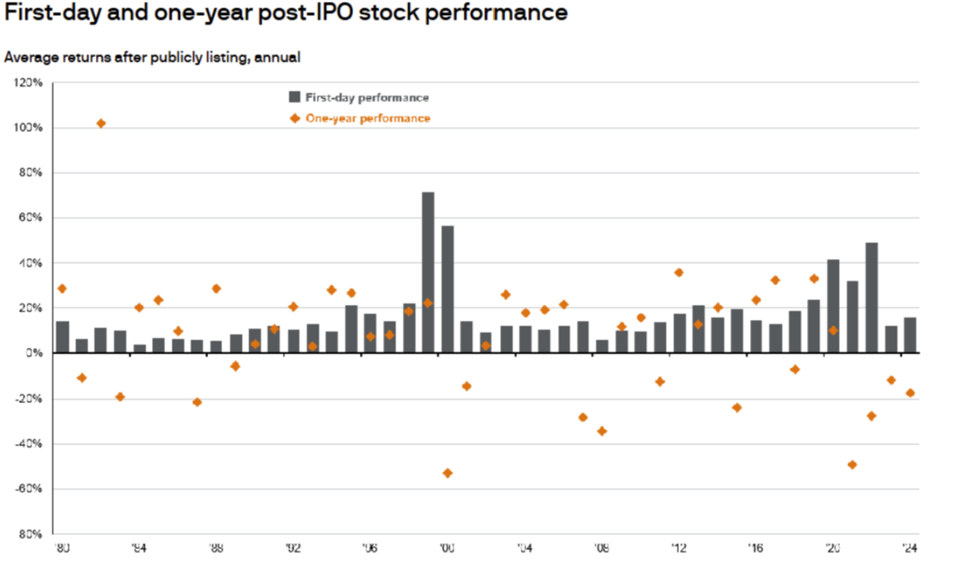
SpaceX’s ambitions are bold. The company aims to lead in artificial intelligence and push for human missions to the Moon and Mars. These goals require significant capital and carry substantial risk. SpaceX reported a loss of $4.28 billion in the first quarter of 2026. History shows that companies with large losses often see their stock prices fall after the excitement of an IPO fades (source: Bloomberg).
Index Inclusion
SpaceX is moving quickly toward inclusion in major indexes. The company is set for fast-track entry into the Nasdaq 100 and will join FTSE Russell and MSCI indexes later this month. SpaceX shares will become a key holding for many index funds and ETFs, increasing demand from institutional investors (source: Bloomberg). Index investing was initially built as a great way to manage risk, and provide investors balance between different geographies, industries and company sizes. Most North American indexes are market capitalization weighted, which means that larger companies take on an outsized share of the index. The theory is that the market cap weighting allows an index to represent the collective opinion of all investors regarding a company’s relative worth. This compares to price-weighted indexes like the Dow Jones Industrial Average and the Nikkei, whereby the higher the price of the stock the larger its weighting in the index. The index is based entirely on the nominal price of a stock rather than the actual size or economic value of the company. In short, the famous Dow Jones represents a deeply flawed methodology for tracking stock performance.
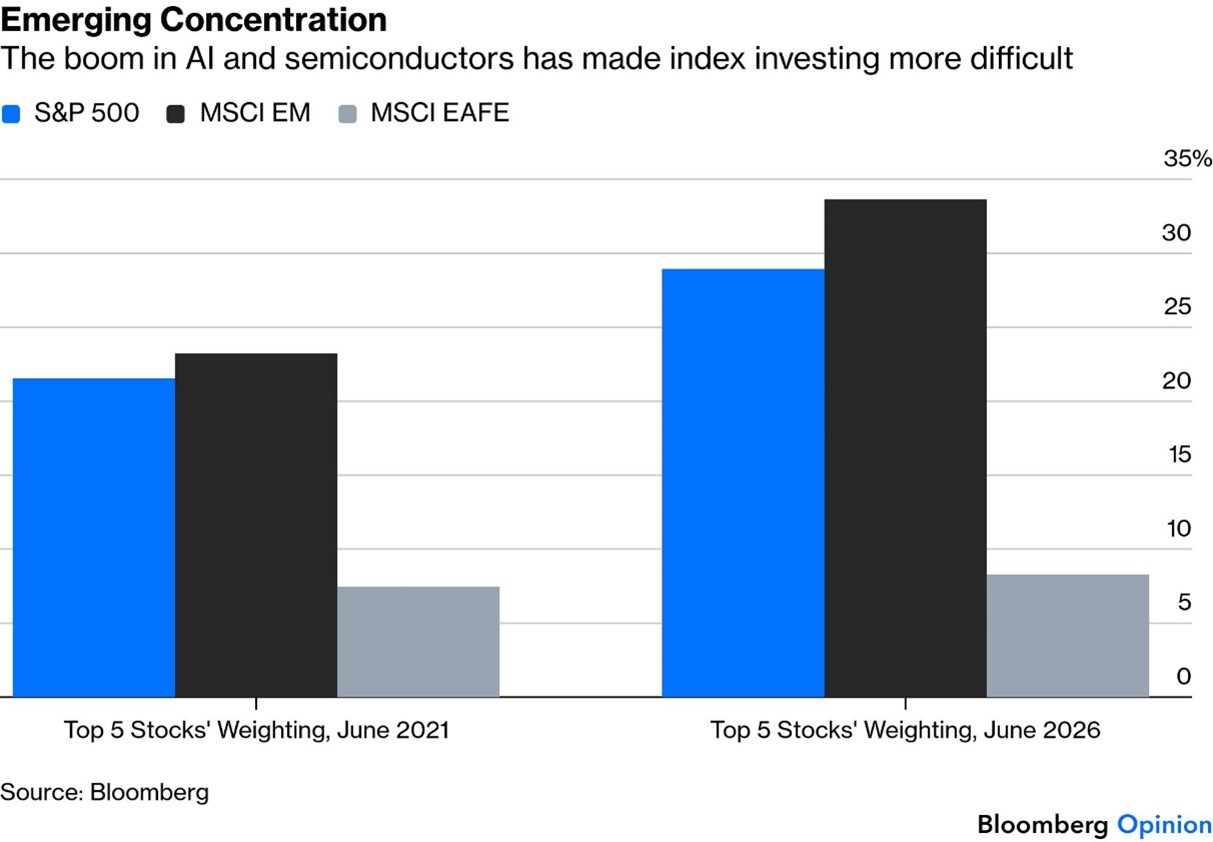
However, now that a few ultra-cap companies, in one sector (and indeed one sub-sector of that sector) dominate the market cap weighted indexes like the &P 500, they no longer provide investors with the diversified benchmark they were hoping for. The problem is summarized well by John Authers in his article here.
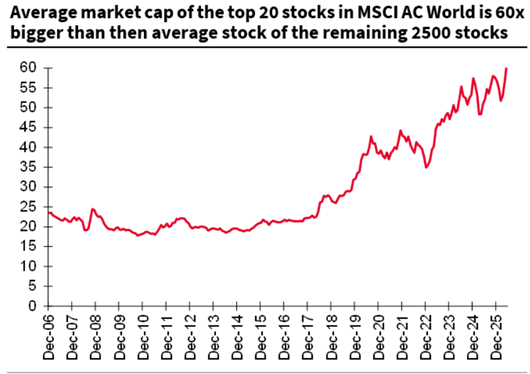
The problem is that benchmark risk forces many investors to take positions in stocks they do not even like. The top 20 stocks are on average 60x bigger than the average of the other 2500 names in MSCI All Country World; being on the wrong side when they move up is painful, so you hold them…
We would take his commentary one step further and add that many investors we speak with are unaware of the inherent concentration of geography and industries within index funds. And as Authers shares ‘This isn’t solely a US problem. The MSCI Emerging Markets index’s big five stocks — Taiwan Semiconductor, Samsung Electronics, SK Hynix, Tencent and Alibaba — on their own account for a third of the entire 1,205-stock index. That is more concentrated than the S&P 500. “Passive” investment in this index requires very active bets on a handful of stocks, all exposed to the same industry and sub-sector.
What To Consider Before Investing
With SpaceX joining major indexes, index funds and institutional investors are expected to increase their holdings. Most retail investors received only a fraction of their requested shares, so demand remains strong as trading continues. Investors should be prepared for considerable volatility, especially given the limited number of shares available. As more shares enter the market, price dynamics may change rapidly. Investing in a company with ambitious goals and ongoing losses involves risk. It is wise to assess your financial situation and investment horizon carefully and to maintain a long-term perspective amid the excitement.
Rapid expansion and early rallies do not always guarantee lasting gains. Many high-profile tech IPOs have seen strong initial performance followed by declines below their IPO price in subsequent months (Airbnb/Snapchat/Lyft/Doordash to name a few) .