







All We are Saying is Give War a Chance (or some time)
The Russia–Ukraine conflict has moved into its fifth year, and now the US attack on Iran has poured fuel onto the geopolitical fire. Markets are again finding it hard to adjust to headlines warning of the potential outbreak of World War III. Each new flashpoint - the Middle East, Eastern Europe, South America, or the Pacific - seems to trigger the same instinctive question: what happens to my investments if war breaks out?
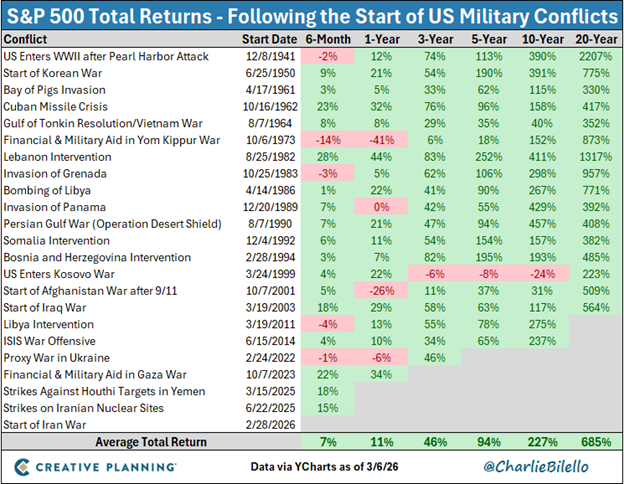
The answer, perhaps surprisingly, is that history offers some reassurance. While markets often react sharply to the uncertainty surrounding geopolitical shocks in the short-term, few modern conflicts have led to sustained declines in equity markets over the medium to longer term. Once the immediate fear subsides and economic fundamentals reassert themselves (corporate earnings, innovation, and consumer demand) stock markets tend to recover, often stronger than before.
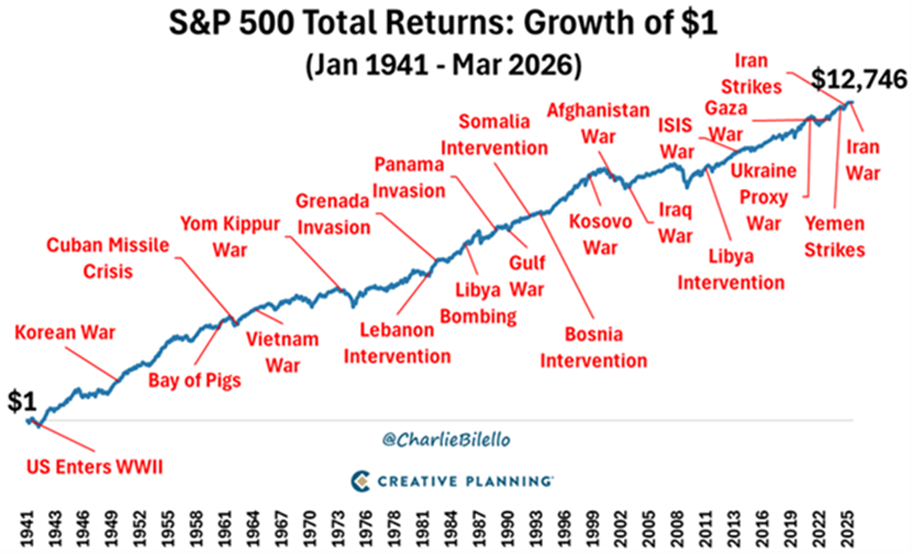
The first days or weeks of a conflict typically see a “risk - off” reaction: investors flock to perceived safe havens such as government bonds, gold, or the U.S. dollar. Yet as events unfold, markets quickly reprioritize, differentiating between short-term disruption and recognizing long-term opportunity. Energy prices may spike, defense stocks may rally, and global supply chains adjust. For disciplined investors, volatility during these times often reveals value in quality companies that have been oversold amid fear.
Our own portfolio strategy reflects that discipline. Over recent months, we’ve taken a proactive approach – rebalancing to trim our equity exposure after another strong year in 2025 and adding to our fixed income and cash positioning that we can draw upon if we see opportunity. We also recently reduced our energy exposure in early March after seeing +40% run up in energy stock prices on the heels of the Iran conflict. The companies are priced for the conflict to be permanent and are getting a bit expensive, so our disciplined approach makes us step in to rebalance.
While headlines can be unsettling, successful investing has always required perspective and patience. Wars end, economies adapt, and capital eventually finds its most efficient uses. In the meantime, thoughtful rebalancing, diversification, and discipline remain the investor’s best defense.
Related posts
Brady Clark Advisory Group
May 01, 2026
Corporate Earnings - The Market's Long-Term Driver
Short-term stock market volatility tends to capture the most headlines. But is is really what has the biggest determinant on returns? Perhaps investors should focus on earnings in the stock market, as...
Read more